
Creative Operations | Prioritization
Workfront Priority Ranking Engine
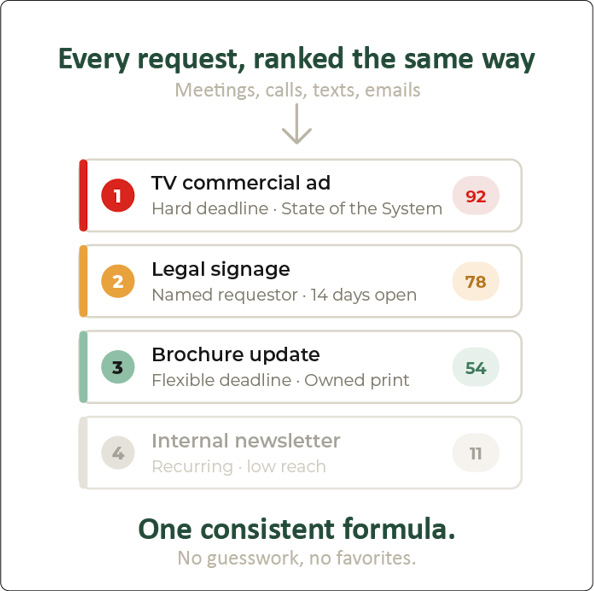
Incoming project requests had no consistent way to rank against each other, so prioritization defaulted to whoever asked loudest or most recently, and simple priority buckets meant everyone’s request eventually became "urgent." A weighted scoring model replaced that with a granular, continuous number that couldn’t collapse into a pile of ties.
Context
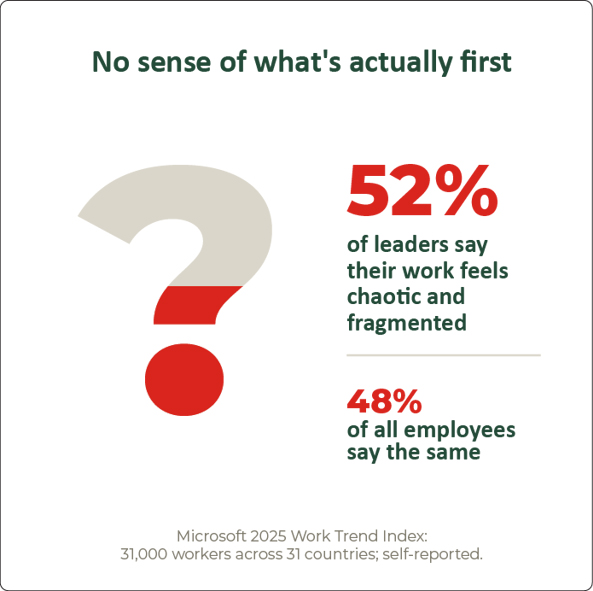
10+ 'urgent' projects, and still no way to know what to do first.
Marketing operated in a constant, reactive environment, requests arrived through meetings, calls, texts, and emails, with no single front door and no consistent way to answer the question every manager and team member actually needed answered: what should I work on first, second, third? Teams across the organization repeatedly tried to solve this on their own, with weekly huddles, stoplight reports, and running priority lists, processes that consumed real management time without ever guaranteeing consistency. A common failure of simpler systems showed up constantly: once priority became a small set of labels, Low, Medium, High, Urgent, everything eventually drifted into the top bucket, and management ended up with fifteen “urgent” projects and no real way to tell them apart.
Action
A scoring model with no room for guesswork.
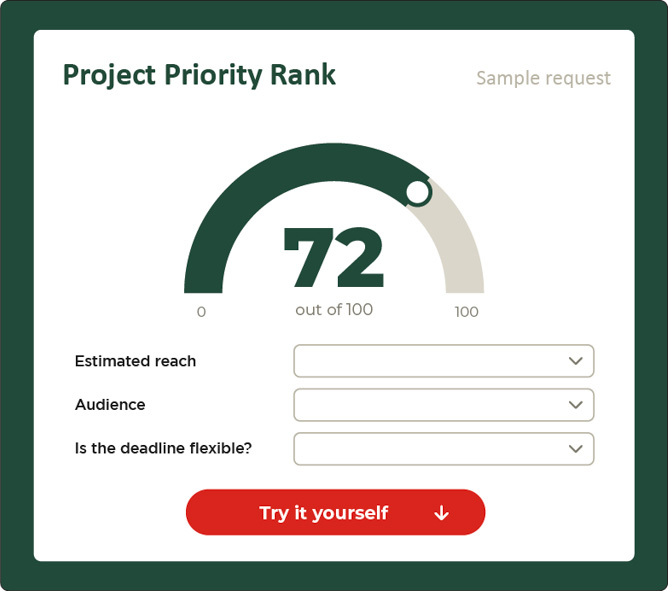
Scattered points of entry were replaced with a single, structured intake request. Every field in the resulting scoring model fell into one of two tiers. Five Required fields, estimated reach, audience, category, sub-category, and investment type, were each scaled so their answer options summed to a possible weight of 100, setting the baseline scale every request was measured against. A set of Variable fields added or subtracted weight based on context: who submitted the request (named, recognized requestors carried real weight, functioning as a known-requestor flag rather than a seniority ranking), how many days a request sat open past its planned completion (weight climbed the longer it aged), whether the deadline was flexible, how much internal and external effort it required, and what kind of event or deliverable it was tied to, weighted individually down to specific categories like Board of Trustees materials or a Benefits Book. A calculated field in Workfront applied the model automatically. A request’s priority number started the moment it was submitted, then adjusted itself as the assigned project manager reviewed and added information, arriving at a final, locked priority number once the project moved from planning into active work, the number that then appeared on the active project listing.
Result
An objective answer, calculated instantly, with no ceiling everyone could pile into.
Every request received a specific, granular number rather than a label, which meant priority couldn’t collapse the way simple bucket systems always did, there was no “urgent” tier for fifteen projects to crowd into, because the scoring itself was continuous and could always tell two requests apart. It replaced the kind of manual weekly alignment process that persisted elsewhere in the organization, without ever reaching the same level of consistency, detail, or actual usefulness.