
Brand Strategy | Internal Communications
Strategic Plans | Communications & Cultural Integration
A multi-year strategic plan, dense with executive language, meant little until it was translated into something frontline associates actually saw and remembered. That translation carried through multiple plan cycles over more than a decade.
Context
A strategic plan means nothing if nobody remembers it.
Every few years, leadership developed a new multi-year strategic plan, a dense document of vision statements, strategic focus areas, and initiatives, built through months of workshops with outside consultants. Written in the language of executives, that plan had little chance of shaping day-to-day behavior across a large healthcare system unless someone translated it into something frontline associates, most of them not business professionals, actually saw, understood, and remembered.
Action
Strategy that speaks in the language of the people living it.
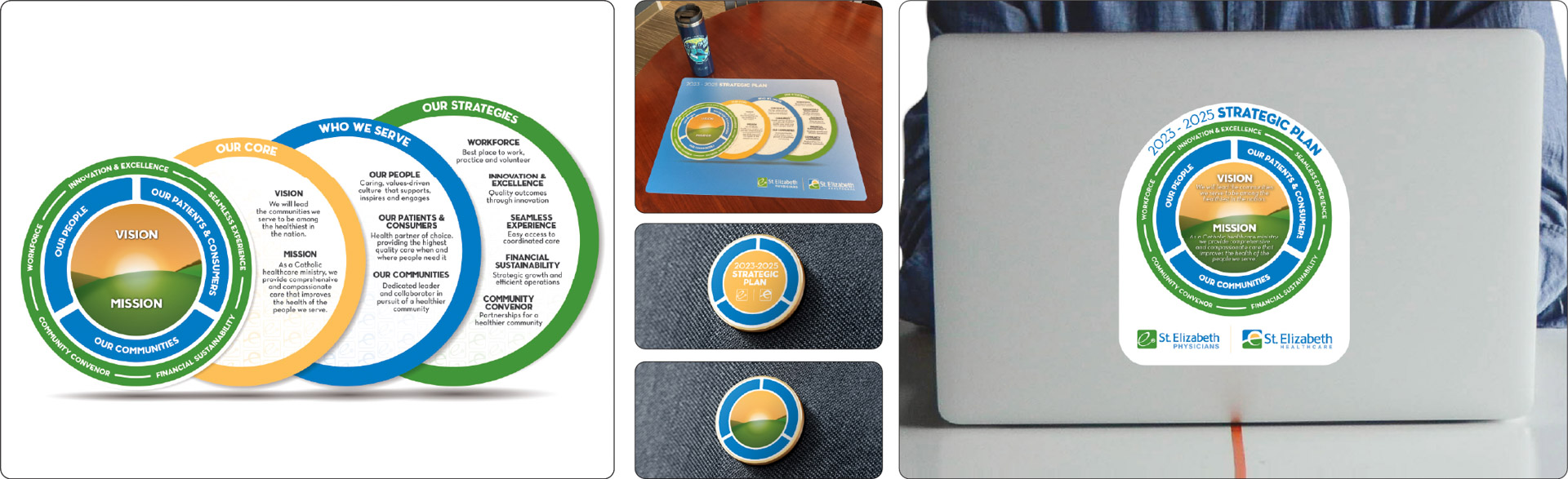
Dense, executive-level strategy had to become ideas and language a hospital’s frontline workforce would actually connect with, then a visual system that carried it forward. We shaped a complete visual identity around each plan’s strategic focus areas, including a custom symbol and icon set for each pillar, and extended that identity into every format associates would encounter: environmental signage, presentation decks, and physical takeaways including placemats, mouse pads, and wall clings. To help managers explain the “why” behind the plan to their own teams, we also built out a broader asset library for them to draw on, PowerPoint templates, huddle board art, email templates, and talking points, so the plan showed up consistently in daily communication throughout its entire timeframe, not just at launch.
Result
Strategy, made visible and physically present.
The plan’s priorities became something associates encountered repeatedly in their everyday workspaces, not a document read once and forgotten. The same strategic focus areas carried directly into other systems: they were tied to overall gainsharing goals, and built directly into the structure of system management meetings, where the agenda and presentation content for every single department spoke to a specific area of the plan. The language of the strategic plan shaped not just what people saw, but which work actually got prioritized and how leadership across the organization talked about it.
← Previous
I’M RIGHT HERE | Cultural & Community Extension
Next →
SUN Behavioral Health | Brand World